
How to Identify a High Quality Military Nylon Watch Strap

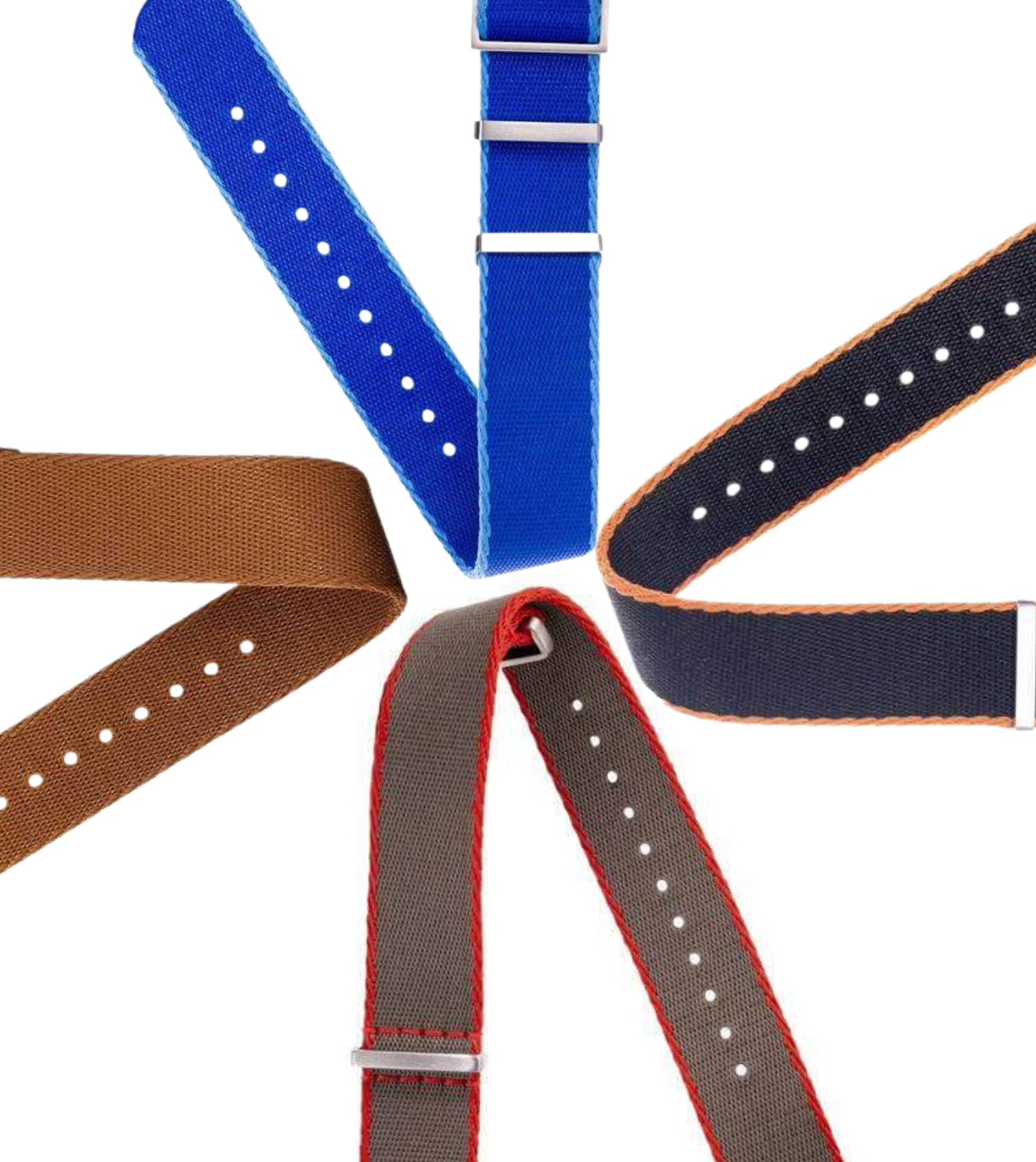
Military nylon watch straps, often called NATO straps, all look similar at first glance.
To most buyers they appear almost identical in photos. However, when examined closely, the differences between a premium strap and a generic low quality strap become very clear.
In this guide we compare a premium nylon military strap to multiple generic straps from different sources and show exactly what determines durability, comfort, and longevity.
[ SHOP THE MILITARY NYLON STRAPS COLLECTION ]
1. The Nylon Material Itself
The most important factor is not the buckle or the stitching.
It is the nylon fiber.
A high quality strap uses high density ballistic nylon. The weave is tight, uniform, and consistent. When you zoom in, the fibers appear rounded and compact.

Lower quality straps use thinner nylon threads and a loose weave. You can immediately notice:
• uneven spacing
• flat looking fibers
• visible gaps between threads

Why this matters:
Loose weave nylon stretches, absorbs sweat faster, and begins to feel rough after short use. Dense nylon stays smooth and flexible and becomes more comfortable over time instead of worse.
This single factor alone often determines whether a strap lasts months or many years.
2. Edge Construction
Many buyers look at color and stripes, but the edge finishing is actually one of the easiest ways to identify quality.

Most generic military straps seal the edges by melting the nylon with heat.
This creates a hard plastic like edge.
Problems with heat cut edges:
• sharp feel on the wrist
• skin irritation
• edges crack over time
• fraying eventually starts

A premium strap instead uses reinforced stitched edges. The edge is folded and sewn, not burned. This produces:
• softer contact with skin
• cleaner appearance
• long term durability
This is why some nylon straps feel comfortable immediately while others feel stiff or scratchy.
3. Stitching and Reinforcement
The stitching is not cosmetic.
It is structural.

High quality straps use:
• thicker thread
• double stitching
• reinforced stress points
The buckle area and keepers carry the entire weight of the watch. Cheap straps often fail here first because they use thin thread and minimal reinforcement.
A properly constructed strap can hold heavy watches for many years without loosening.
4. Hardware Quality
Many people ignore the hardware, but this is where durability is often decided.

Low quality straps typically use stamped thin metal hardware. Over time this causes:
• bending keepers
• loose fit
• deformation

Premium straps use thicker 316L stainless steel hardware with a brushed finish. The difference is noticeable in weight alone. Heavier hardware is not cosmetic. It prevents deformation and maintains security on the wrist.
316L Stainless Steel
Our hardware is crafted from solid 316 stainless steel, a premium marine grade alloy chosen for its exceptional strength, corrosion resistance, and long term durability. This is the same type of steel trusted in high end watches and marine applications, meaning it will not rust, tarnish, or discolor with daily wear, sweat, or humidity. It ensures every strap connection remains secure while maintaining a clean, refined finish for years.
5. Comfort Over Time
This is where the real difference appears.

Cheap nylon straps often feel acceptable at first but degrade quickly:
• they stiffen
• edges irritate skin
• fibers become rough
High density nylon behaves differently.
It actually breaks in similar to leather. The fibers soften and conform to the wrist while keeping structural strength.
A well made military nylon strap can realistically last a many decade.
Why This Matters
Military straps were originally designed for reliability. The watch stays attached to the wrist even if a spring bar fails. But that reliability only works if the strap itself is properly made.

Two straps may look identical online.
In reality they are completely different products.
When evaluating a nylon watch strap, ignore brand names and marketing claims. Instead check:
• density of the nylon weave
• edge finishing
• stitching thickness
• reinforcement points
• hardware weight
These features determine whether the strap is disposable or long term equipment.
Final Thoughts
A true high quality military nylon strap is not defined by color or style.
It is defined by construction and materials.

Once you know what to look for, the differences become obvious even from close up photographs. A properly made strap is smoother, stronger, and significantly more comfortable. More importantly, it will remain reliable for years rather than months.