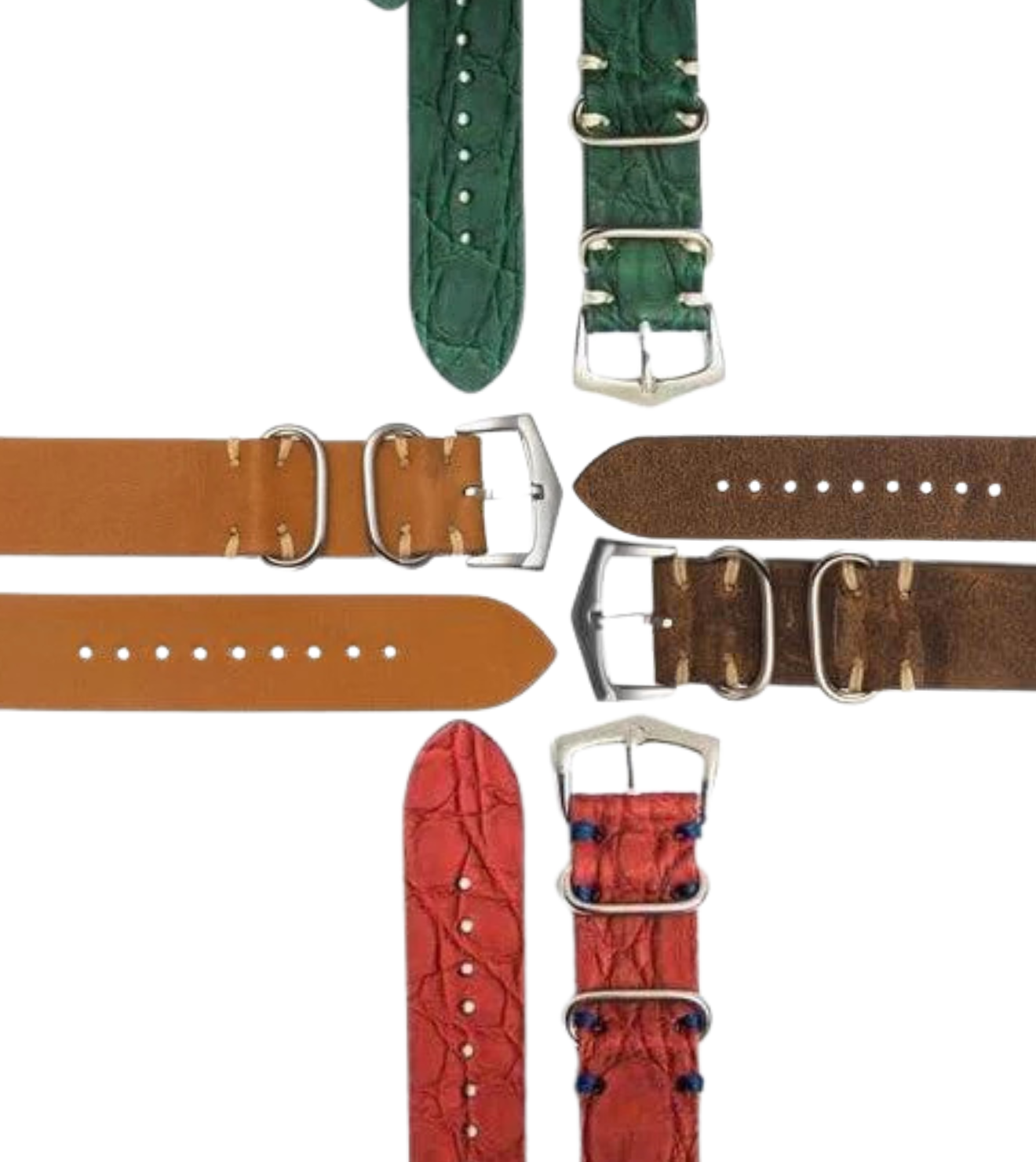

How to Tell Real Exotic Leather from Embossed Exotic Leather on Watch Straps
Learn how to identify genuine alligator, crocodile, and other exotic leathers compared with embossed or stamped leather. This guide includes practical inspection methods, close visual observations, and clear checklists so you can confidently choose the right watch strap.

In today’s market, many watch straps use patterned calfskin that visually resembles exotic leather. When the materials are not clearly explained, buyers can easily misunderstand the value and construction of a strap. Genuine exotic leather requires specialized tanning, careful cutting, and skilled assembly, which is why it occupies a different price level.
This guide explains what makes exotic leather unique, how to recognize authentic skins, and what to examine in the construction of the strap itself so you can properly evaluate quality before purchasing.
[ SHOP THE ALLIGATOR WATCH STRAPS COLLECTION ]
Why This Matters
Exotic leather watch straps occupy a very specific place in the world of watch accessories. They are not simply decorative materials. Genuine alligator, crocodile, ostrich, and other exotic skins have a natural structure that gives them flexibility, strength, and long term durability when properly prepared.

Because these materials are visually distinctive, many products in the market attempt to reproduce the same appearance using patterned or embossed leather. When materials are not clearly understood, buyers often compare items that are built very differently. This leads to confusion about pricing and quality.
Learning how to examine a strap helps customers make informed decisions, protects the reputation of well made products, and prevents disappointment after purchase.
The Exotic Leathers Commonly Used for Watch Straps
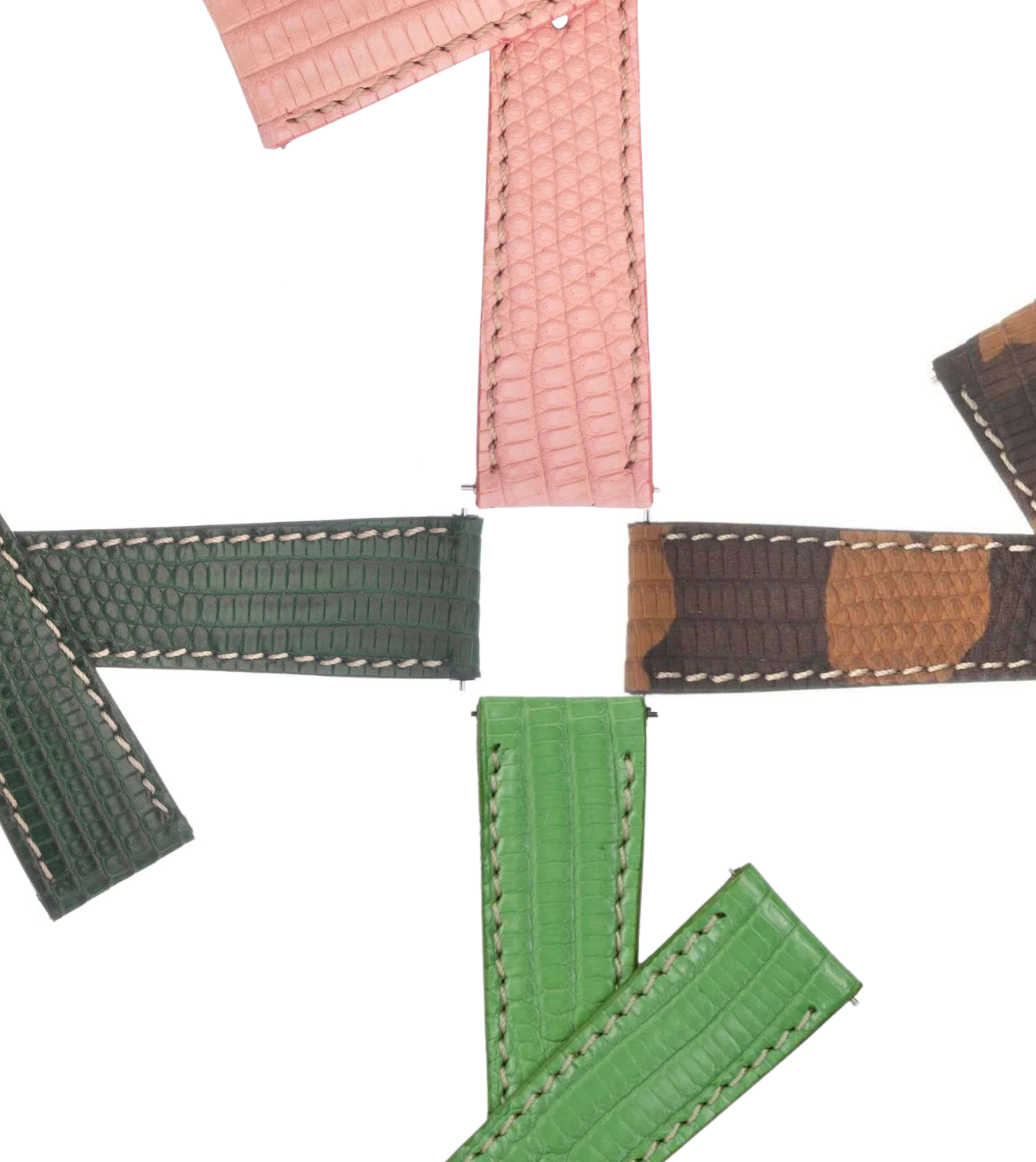
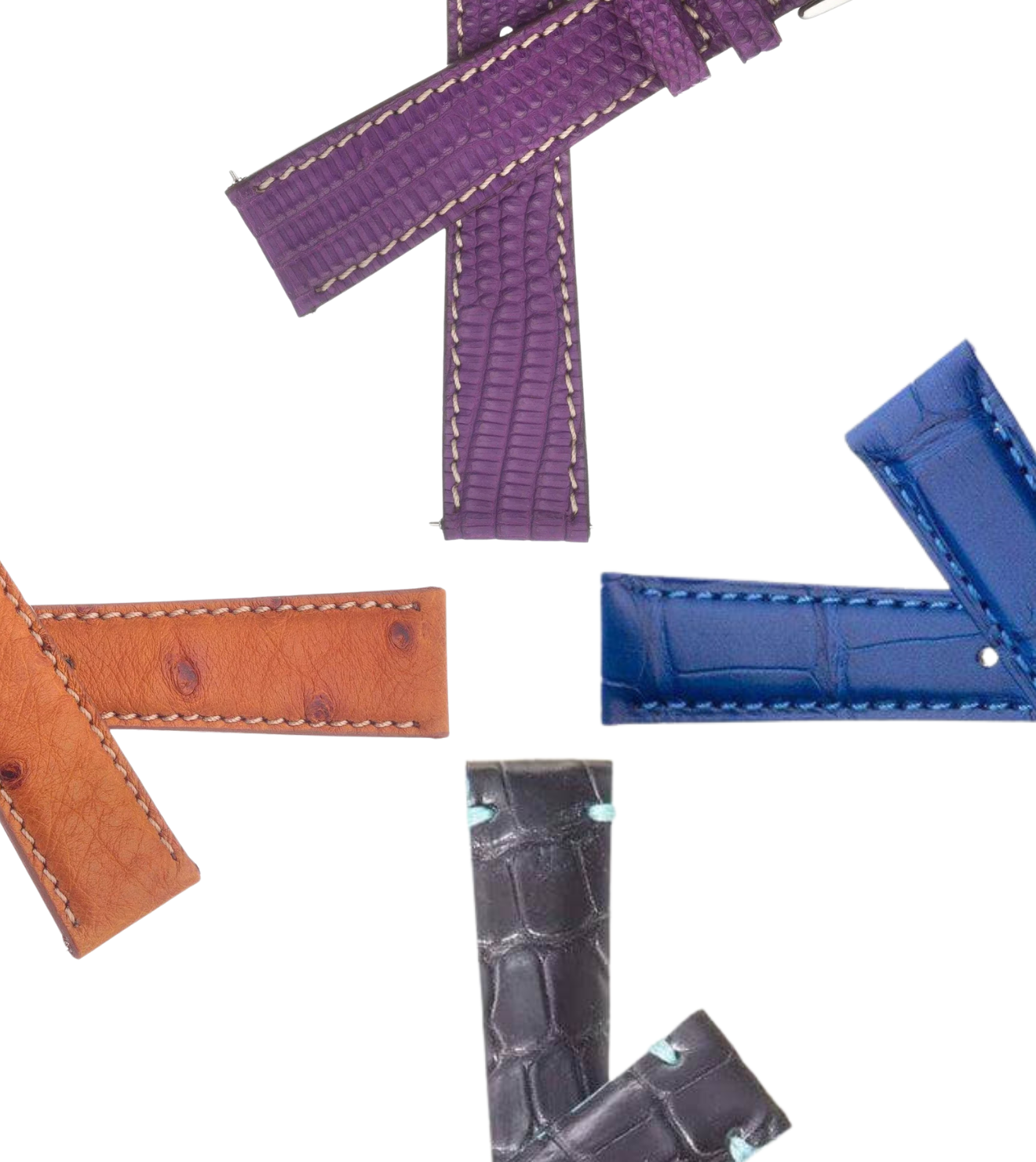
Several natural exotic leathers like Alligator, Crocodile, Lizard, Ostrich, Caiman and Stingray are traditionally used in watch strap manufacturing. Each has a recognizable structure and behavior.
The pattern, pore structure, flexibility, and density vary between species. Among them, alligator and crocodile are the most commonly associated with luxury watch straps because they combine durability with a balanced scale structure that fits well on a wrist.
Materials That Visually Resemble Exotic Leather
In addition to genuine exotic skins, there are also materials designed to reproduce the look of exotic leather.

These include embossed calfskin where a scale pattern is pressed into the surface, composite leather sheets printed with scale designs, synthetic materials with an exotic appearance, and standard leathers that are finished and coated to imitate natural scales.
These products are not necessarily poor quality when honestly represented, but they are fundamentally different materials and are manufactured using different processes and costs.
Alligator Watch Straps

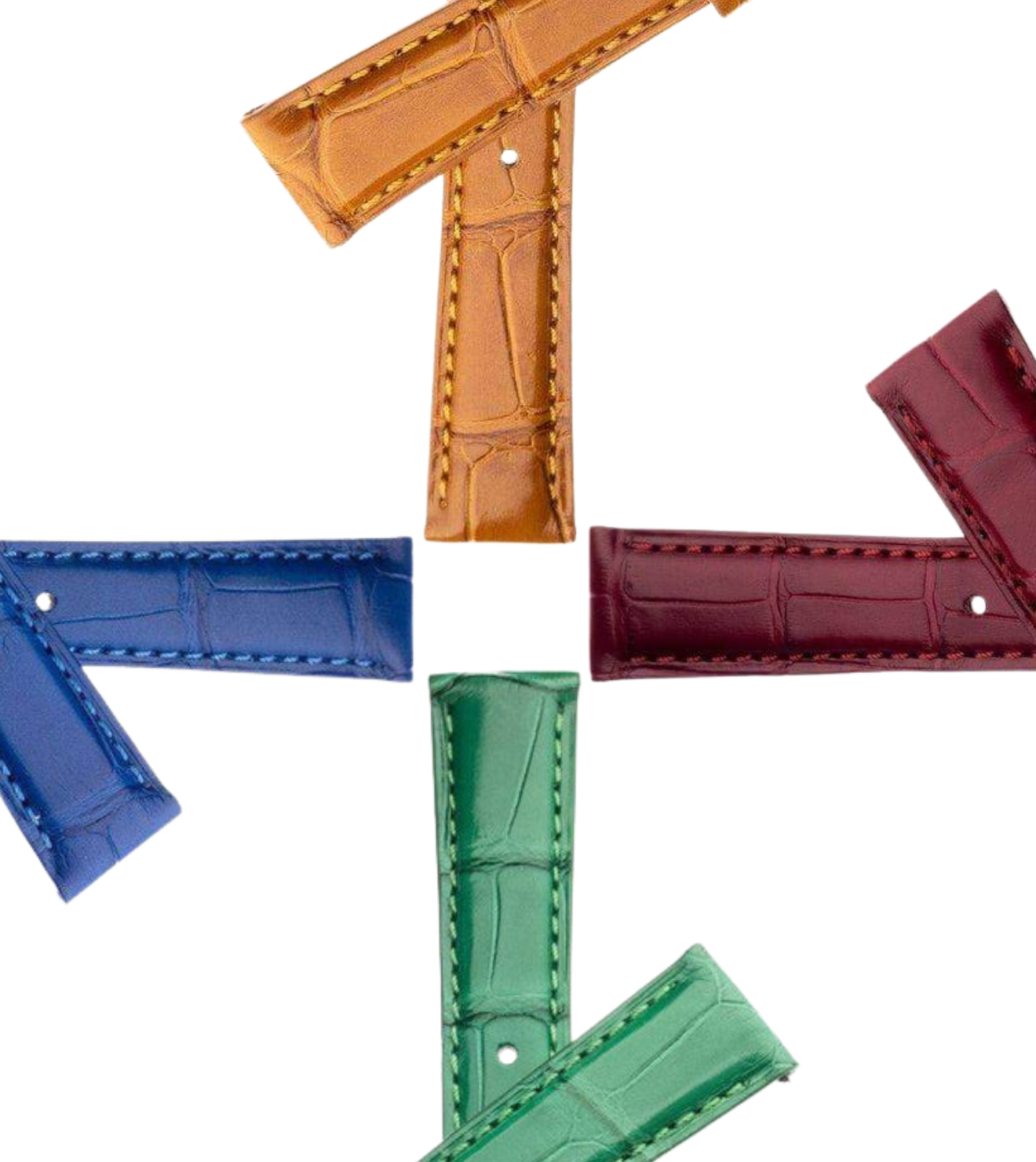
Alligator watch straps are one of the most desirable types of exotic leather straps. Genuine alligator leather is known for its square scale pattern, flexibility, and long term durability. Compared to standard calfskin leather, alligator straps age differently, developing a natural patina while maintaining their structure.
Many collectors prefer alligator watch straps for dress watches because the material is lightweight, comfortable, and visually distinctive without being overly flashy. The leather gradually adapts to the wrist and becomes softer over time while still retaining strength.
If you are looking to purchase a genuine alligator watch strap, you can view our collection here.
Understanding the Visual Differences
Real Alligator vs Embossed Leather
Embossed leather is made by pressing a pattern into flat cowhide using heat and pressure, so the scales look extremely clean and perfectly aligned.

When you zoom in, the lines separating each scale are sharp and uniform, almost printed, and the surface inside every scale appears smooth and empty. Often you need a loupe to notice it, because to the naked eye it can look convincing, but the repetition is too perfect and mechanical.

Genuine alligator is very different. The borders between the scales are irregular and slightly wavy, and inside the scales you can see natural texture, pores, and fine grain rather than a flat surface. The lines are never perfectly straight and the pattern does not repeat exactly from one scale to another. Real alligator always shows variation, depth, and life, while embossed leather looks neat but artificial once examined closely.

The most important step when evaluating a strap is careful observation. Authentic exotic leather shows natural irregularity, while patterned leather tends to show visual repetition.

When inspecting a strap, examine the scale pattern, pores, edge finishing, underside construction, stitching, and hardware. Real skins will display organic variation. Patterned leather often shows repeating shapes that appear nearly identical across the strap.

Scale Depth
When tilted toward light, real scales reveal subtle depth and contour. The surface is not flat. The edges catch light differently.

Embossed leather appears flatter, and the pattern looks pressed into a smooth surface rather than naturally formed.

Real Lizard VS Embossed Leather

Real lizard leather is natural skin, so the scales have depth and character. Each scale is outlined and usually shows a softer inner oval within it, giving a layered look and a slight relief you can feel with your finger.

Because it is a real hide, the shapes are never perfectly identical and some areas may appear more rounded or more elongated depending on the part of the animal.
Embossed leather is different. The pattern is created with heat and pressure stamped into flat cowhide, so the surface stays smooth and uniform.

The circles repeat in a mechanical way and the inside of each one remains plain, without pores, inner shape, or natural variation. Even when the pattern looks convincing at first glance, the lack of depth and the perfectly even repetition reveal it is only an imprint, not genuine lizard.
How to Recognize a High Quality Exotic Leather Watch Strap
After learning how to identify real versus embossing reptile leather, the next step is understanding that not all genuine exotic leather straps are equal.

Two straps can both be real alligator, crocodile, or lizard leather yet feel completely different in comfort, durability, and appearance. The difference comes from craftsmanship, hide selection, and construction, not simply the material itself.

1- Hide Selection and Scale Alignment
A premium strap begins with careful cutting of the hide. The maker selects a balanced section so the scales or grain run straight along the center of the strap and flow naturally from lug to tip. This creates symmetry and a clean, elegant look on the wrist. Lower quality straps are often cut from the edge of the hide where the pattern becomes irregular, causing scales to look off center or distorted and sometimes interrupted by the sizing holes. Even though the leather is genuine, poor selection immediately affects both aesthetics and longevity.

2- Surface Texture and Natural Character
High quality exotic leather shows natural life. Each scale or grain has subtle variation, fine pores, and visible depth. The pattern never repeats perfectly because it comes from real skin. Lower quality straps may still be authentic but can appear flat, overly coated, or inconsistent because the hide was thin or heavily corrected during finishing. Authentic material alone does not guarantee refinement. The best straps preserve natural texture while remaining structured and refined.

3- Stitching and Durability
The stitching plays a major role in how long the strap will last. A hand saddle stitch uses two needles crossing through the same hole, forming an interlocking seam. Each stitch holds independently, so even if one area is damaged the rest of the seam remains secure. This method also creates a slight angled pattern that indicates traditional handwork. Machine stitching is straight and uniform but relies on a single continuous thread. If it breaks, the seam can begin to unravel along the line. For everyday wear, saddle stitching greatly improves durability and resistance to stress.

4- Back Side Construction and Lining
The underside of a strap reveals its true quality. On a well made strap the lining leather fits tightly around each stitch and the holes are clean and controlled. The lining remains stable and helps protect the strap from sweat and moisture. Lower quality straps depend heavily on glue, and with wear the lining can lift, separate, or stretch around the holes. A proper lining increases lifespan and also improves comfort on the wrist.

5- Spring Bar Reinforcement and Keeper Loops
The highest stress point of any watch strap is the spring bar area and the keeper loops. A high quality strap secures the folded end using both stitching and adhesive, locking the leather around the spring bar to prevent tearing. The keeper loops are also reinforced and shaped from solid leather so they hold the tail firmly. In lower quality construction this area is often glued only, which leads to cracking, separation, and eventual failure. In real use, this section often determines the true lifespan of the strap.

6- Structure and Overall Craftsmanship
Even among genuine exotic leather straps, structure makes the largest difference. A properly constructed strap has even padding, balanced thickness, straight stitching lines, and a natural taper. It sits flat on the wrist and maintains its shape over time. Poor construction leads to twisting, uneven thickness, misaligned pattern, and premature wear.

Genuine exotic leather is only the starting point. Real quality comes from hide selection, traditional stitching, reinforced construction, and careful finishing. When these elements come together, the strap not only looks better but also ages gracefully and performs reliably for years.

7- Certification and Legal Sourcing of Exotic Leather
Exotic leathers such as alligator, crocodile, and lizard are regulated internationally and cannot be traded freely like ordinary cowhide. They fall under the CITES Convention on International Trade in Endangered Species, which requires official permits for harvesting, processing, export, and import. Each skin must be documented and traceable to a registered farm or legal source before it can be sold or transported across borders.
Without these permits, the material cannot legally enter many countries and may be seized by customs. High quality watch straps are therefore produced only from certified hides supplied by authorized tanneries that follow wildlife and trade regulations. When a strap comes from a proper source, the documentation exists even if the final customer never sees it. This legal chain of custody is an important part of quality because reputable makers use regulated and responsibly sourced material, not unidentified skins of uncertain origin.
Conclusion
Choosing an exotic leather watch strap is not only about appearance. Real quality comes from understanding the material, the craftsmanship, and the origin of the leather. A genuine hide alone does not guarantee a good strap. Proper hide selection, natural grain, traditional stitching, reinforced construction, and legal sourcing all work together to create a strap that is comfortable, durable, and worthy of a fine watch. When these elements are present, the strap will age beautifully and develop character instead of wearing out prematurely.
If you are investing in a quality timepiece, the strap should meet the same standard. Take a closer look at construction, stitching, and sourcing before making a decision. Explore our collection of certified exotic leather watch straps and compare the details yourself. Once you handle a properly made strap in person, the difference becomes immediately clear.