
How to Choose the Correct Spring Bars for Your Rolex Watch Vintage and Modern Models Explained
A helpful guide for any Rolex owner searching to buy Rolex spring bar replacement.
Rolex is one of the very few watch manufacturers that treats spring bars as a critical engineered component, not a generic accessory. While many Swiss watch brands rely on off the shelf spring bars, Rolex designs and specifies its own spring bar types with the same attention given to cases, bracelets, and clasps.
[ SHOP THE ROLEX SPRING BAR COLLECTION ]

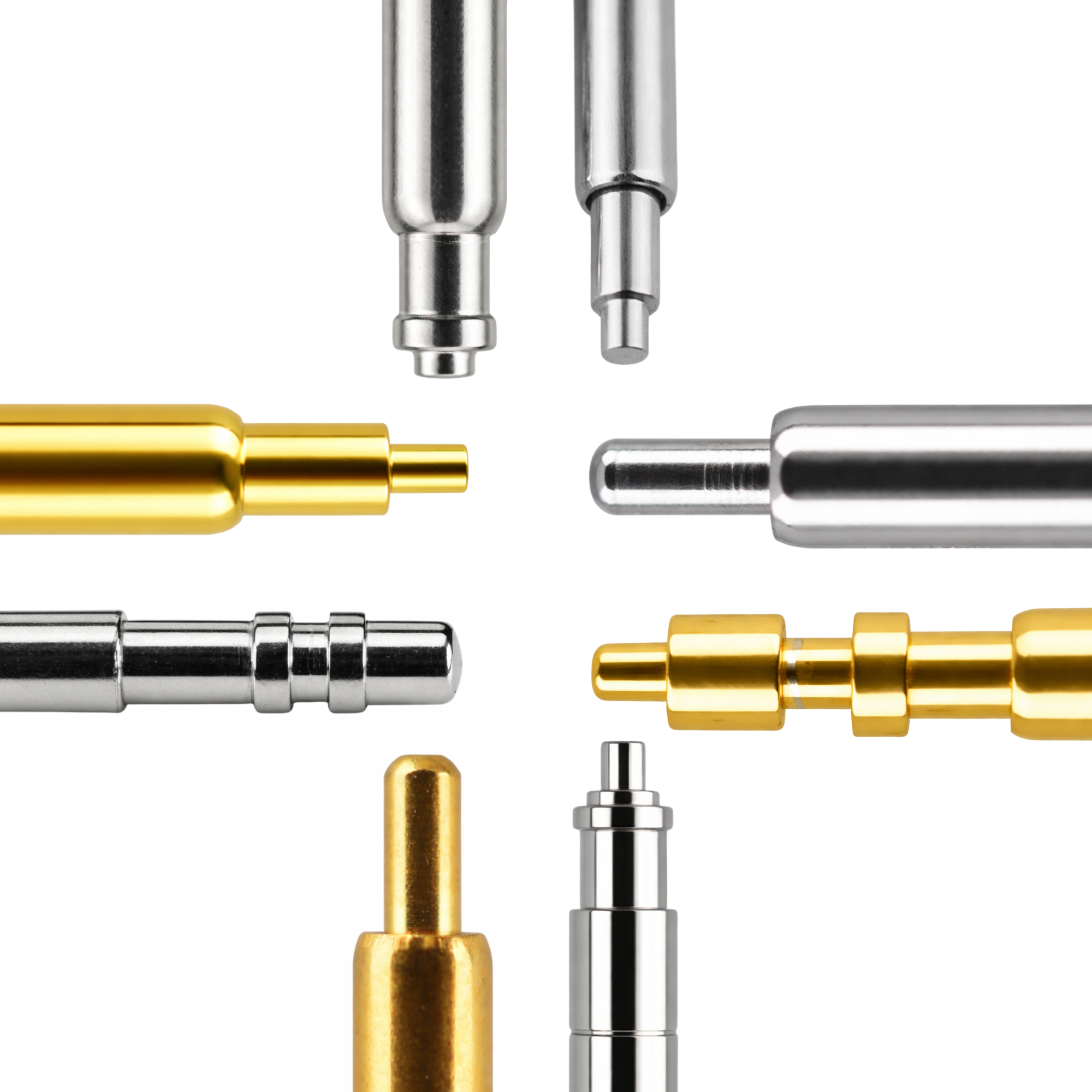
To the untrained eye, Rolex spring bars may appear simple. In reality, they are among the most precise and model specific components used in modern and vintage watchmaking. From a watchmaker perspective, Rolex spring bars are never random and they are never interchangeable unless specifically designed to be.
Why Rolex Spring Bars Are Different
From the 1950s onward, Rolex rarely adopted standard components without modification. Even when third party suppliers were involved historically, every part was either redesigned or altered to meet Rolex specifications. Spring bars are no exception.
Rolex has produced hundreds of distinct spring bar variations over the decades. Many appear visually identical yet differ by as little as 0.02 mm in length, diameter, or tip geometry. These tolerances matter. A spring bar that is even slightly incorrect can compromise fit, stability, and long term wear.
This is why choosing the correct Rolex specific spring bars is essential.
The Importance of Spring Bar Tips
One of the most overlooked details is the spring bar tip design. Rolex tips are typically rounded, not flat. This rounding is subtle and often invisible to the naked eye, but it serves a very specific purpose.
Rounded tips allow the spring bar to seat smoothly into the lug holes without biting into the edges. This minimizes wear, prevents deformation of the lug holes, and protects the case over time. Flat tip spring bars commonly found on the market can gradually enlarge lug holes, especially on vintage Rolex watches, leading to irreversible damage.

Thickness, Material, and Bracelet Pairing
Rolex does not use one thickness across all models. Oyster bracelets typically require thicker spring bars, but not always. Certain references, production years, and materials change the specification entirely.
For example, yellow gold Submariners may use different spring bars than their stainless steel counterparts. Some Day Date II models use yellow gold spring bars, while others in rose gold use rose gold matched spring bars. These differences are intentional and functional, not cosmetic.
Rolex spring bars are also built with a dual purpose design. The outer tube uses corrosion resistant steel while the internal spring is made from an extremely high tension alloy. This ensures maximum resistance under load while maintaining elasticity over time.
Case Holes and Production Year Matter
Even within the same reference, spring bar specifications can change depending on the year of production. A Submariner from the 1980s with drilled lug holes uses a completely different spring bar than a visually identical Submariner from the early 2000s with no lug holes.
This is where many mistakes happen. Two watches that look the same do not necessarily use the same spring bars. Lug hole depth, internal tolerances, and bracelet end link design all affect the correct specification.

Why Correct Spring Bars Matter More Than You Think
Spring bars do far more than simply hold the bracelet in place. They control how the bracelet interfaces with the case. Incorrect spring bars allow excess movement, leading to case scratches, end link wear, and even damage to serial numbers between the lugs.
Worse, low quality or incorrect spring bars can fail without warning. A weakened internal spring may not show visible signs before breaking, potentially resulting in the watch falling from the wrist.
This is why experienced collectors and watchmakers never compromise on spring bars. A properly specified spring bar improves stability, protects the case, and enhances the overall wearing experience of the watch.
Choosing the Correct Spring Bars the Easy Way
Because Rolex spring bars are model specific, guessing is never recommended. The correct approach is to select spring bars based on watch reference, case type, and bracelet or strap type. When these factors are matched correctly, the spring bars will meet the same specifications as those originally fitted by the manufacturer.
This eliminates measurement errors, prevents damage, and ensures long term security.
Final Thoughts
Rolex spring bars are a precision component, not an accessory. Their size, shape, tip design, material, and internal construction all exist for a reason. Understanding these differences is essential for preserving both the function and value of your watch.
Using correctly specified spring bars transforms how a Rolex wears on the wrist. The bracelet feels tighter, the case feels more secure, and long term wear is significantly reduced.
This is one of the smallest components in a Rolex watch, yet one of the most important.
[ SHOP THE ROLEX SPRING BAR COLLECTION ]
Rolex spring bars Size Reference Guide
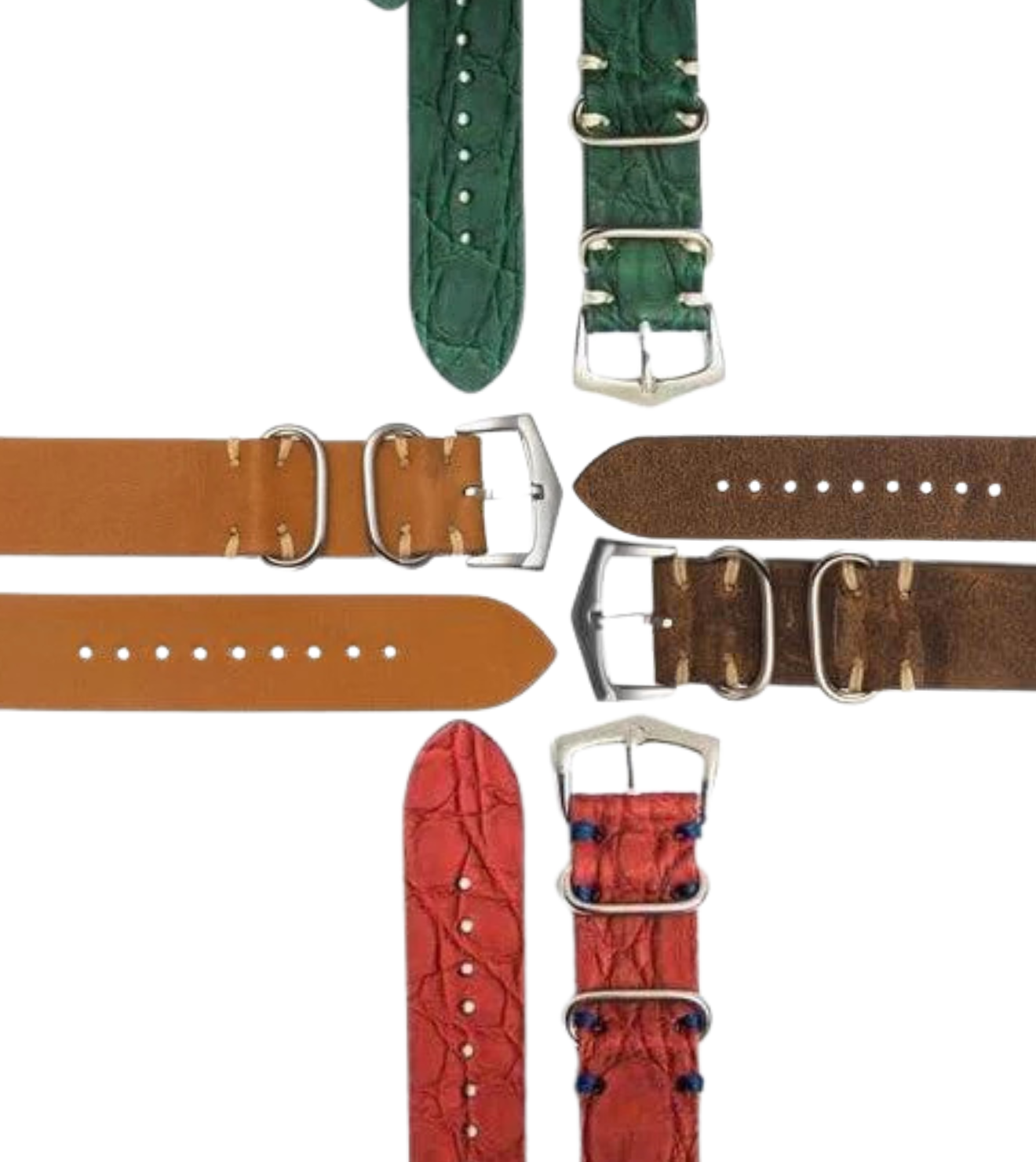
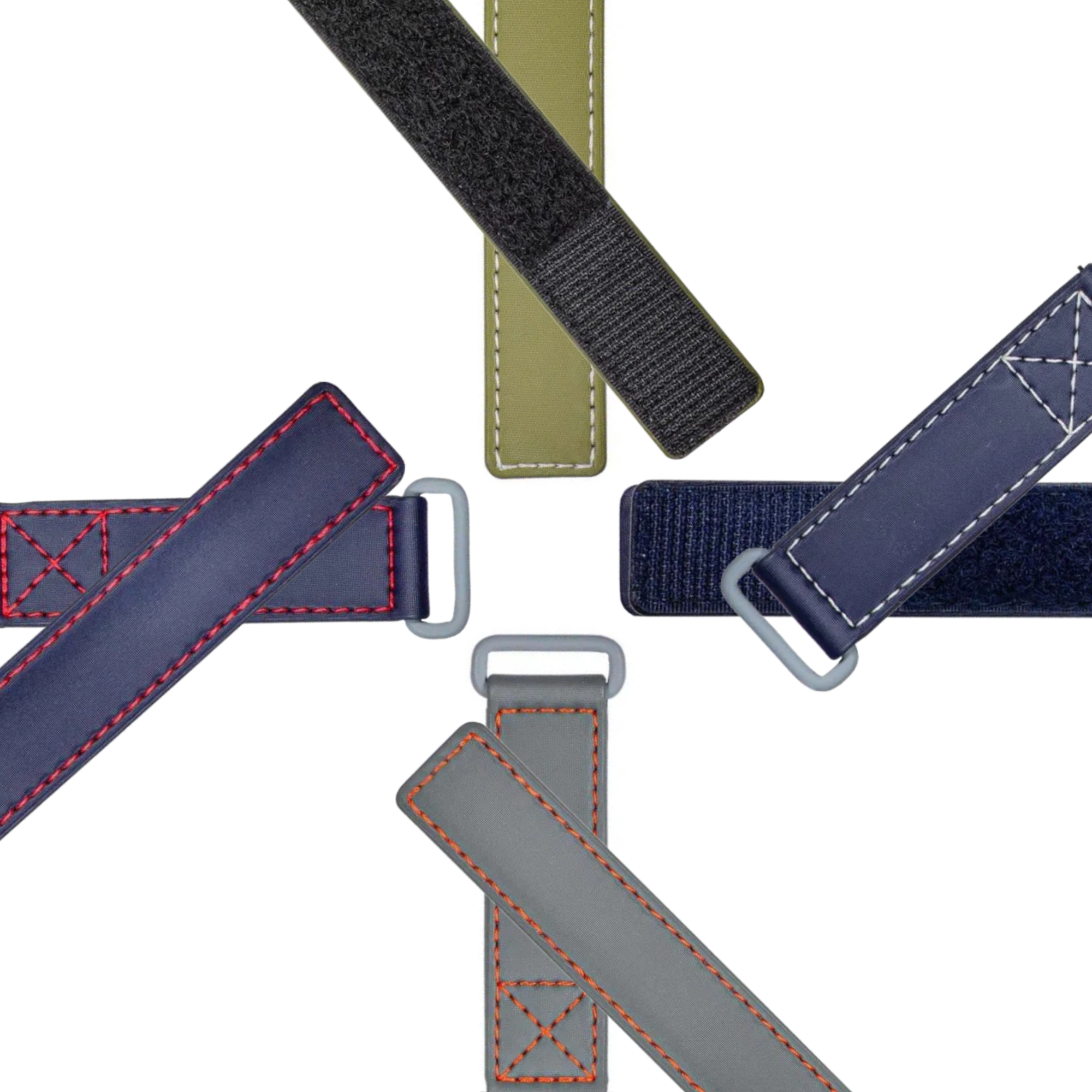
Before choosing a leather or nylon strap, it is essential to confirm the correct lug width. Below is a practical reference for many vintage and neo vintage Rolex models.
Submariner 4 and 5 Digit References
1680
5513
5512
6538
6536
16800
168000
16600
16808
16618
16613
14060
All use 20mm spring bars
Shop Rolex Submariner Spring Bars
GMT Master 4 and 5 Digit References
6542
1675
16750
16758
16700
16760
16718
All use 20mm spring bars and
Shop Rolex GMT-Master Spring Bars
Datejust 36 mm
1600
1601
1603
16013
16200
16018
16200
16000
16014
16030
16220
16233
16234
16238
1625
16253
16263
16264
All references use 20mm spring bars
Shop Rolex Datejust Spring Bars
Oyster Perpetual 34 mm
1002
1003
1005
1007
1008
1022
1024
14203
14233
1500
15000
15003
1501
15010
1503
15038
1505
15053
15200
15203
15210
15223
6022
6084
6284
6090
6282
6294
6426
6494
6565
6564
6567
6569
6694
All references use 19mm spring bars
Shop Rolex Oyster Perpetual Spring Bars
Pre Daytona and Paul Newman 4 Digit References
6038
6238
6239
6262
6240
6241
6263
6265
All use 19mm spring bars
Shop Rolex Daytona Spring Bars
Daytona Zenith and Later References
16520
16528
16523
116520
116523
116528
126500
126505
126508
126509
126506
126515
All use 20mm spring bars
Shop Rolex Daytona Spring Bars
Explorer 4 and 5 Digit References
6610
1016
1655
16550
16570
14270
114270
All use 20mm spring bars
Shop Rolex Explorer Spring Bars
Day Date 36 mm
6611
1803
1807
1802
18038
18238
18039
18239
18346
18296
118238
118239
All references use 20mm spring bars
Shop Rolex Day-Date Spring Bars
Bubbleback 31 mm
Original lug width is approximately 16.7 mm.
However, many collectors install 18 mm or 19mm or 20mm straps and trim the edges slightly to create a visually wider and more proportional appearance.