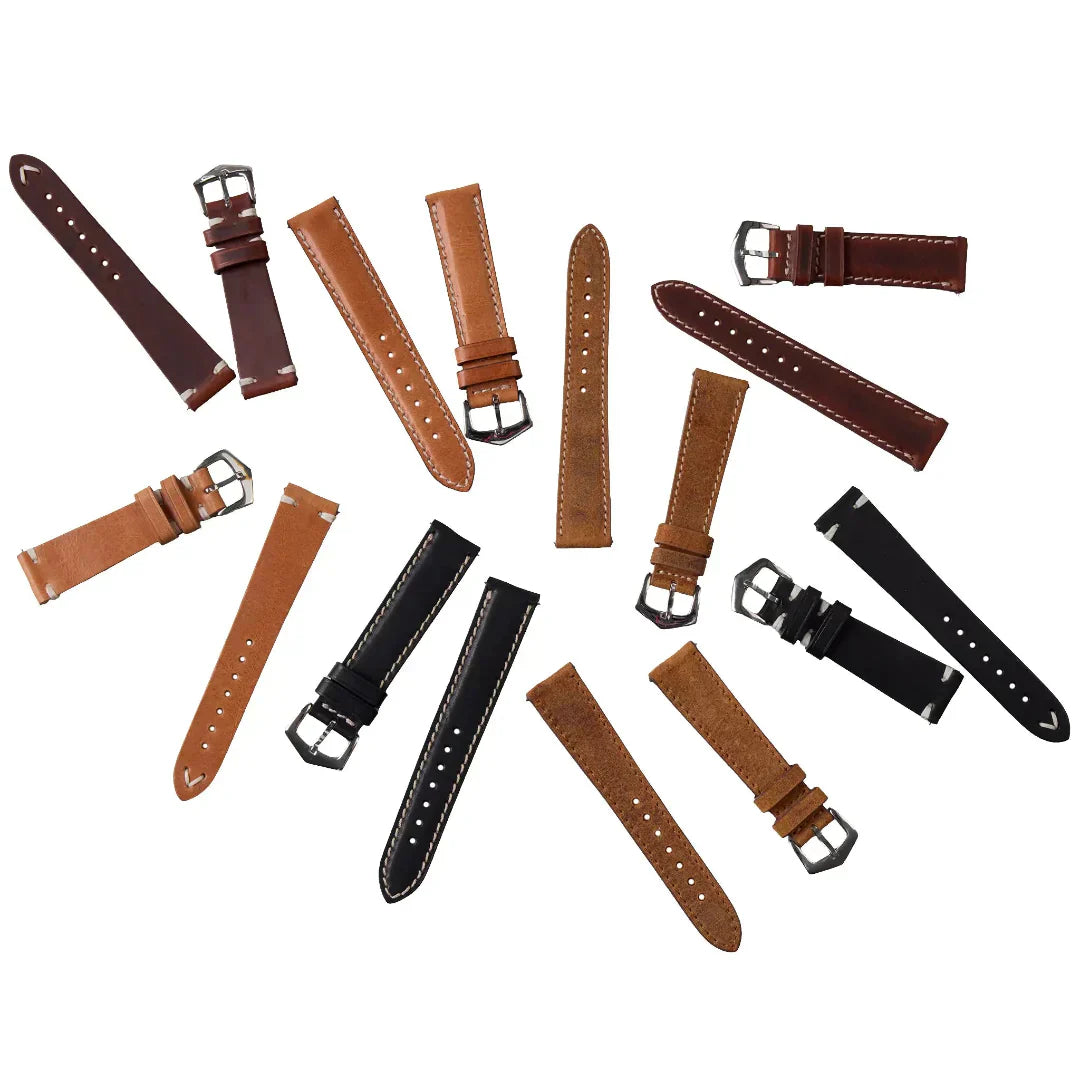

The 2026 Ultimate Watch Strap Guide by Milano Straps History Craftsmanship Leather Quality Sizing Care and How to Choose the Perfect Strap for Your Watch
Where Watch Straps Really Started
Wearable watches showed up long before modern wristwatches. In the 1500s and early 1600s, people carried time on their body as pendants or pieces tied to clothing with ribbons and leather cords. When wristwatches became practical in the late 1800s and early 1900s, watchmakers commonly adapted pocket watches for the wrist using fixed wire lugs soldered to the case, then paired them with leather straps.
Why Leather Owned the Wrist First
Leather became the natural solution because it was flexible, comfortable, and strong while staying elegant. Early wrist worn watches were not built around a steel bracelet culture. They were built around leather, cords, and later purpose made leather straps, which helped define the look of the wristwatch as we know it.
How Metal Bracelets Entered the Story
Metal bracelets became common later, especially as style and manufacturing evolved through the 1930s and 1940s. Even then, leather was still seen as the more classic choice in many settings.
The Truth About Why Most Straps Look Similar Online
Photos hide the real difference. Many straps can look nearly identical in a picture because cameras flatten texture, lighting hides edge work, and listing photos rarely show the internal construction. Real quality shows in the feel, the shape, the stitching tension, and how the strap behaves after months of wear.
What Real Strap Making Actually Is
Strap making is not only cutting leather into a shape. It is engineering, material selection, and precision assembly. A strap has to hold a valuable watch securely, flex thousands of times, resist sweat, stay comfortable, and still look refined.
The 5 Non Negotiables of a High Quality Leather Strap
Sizing That Actually Fits
A strap must match the watch lug width perfectly, and it must match the correct length for the wrist. A strap that is even slightly off can sit crooked, pinch, or pull the watch head to one side. Correct sizing makes the watch feel balanced instead of heavy.
1-Structure and Padding That Controls the Watch Head
The inside architecture matters more than the top leather. Padding thickness, stiffness, and taper control how the watch sits on the wrist. Too soft and the strap collapses. Too stiff and it fights the wrist. A premium strap holds the watch like it was designed as 1 piece.
2-Leather Selection That Separates Luxury From Mass Market
Not every part of a hide belongs on a strap. Only a portion of any hide has the tight fiber density needed for long term strength, clean edges, and even aging. This is why 2 straps made from “leather” can feel like 2 different products. Your hand knows immediately.
3-Stitching That Carries the Load
Stitching is structural. Glue only bonds layers together so they can be assembled cleanly. The stitches carry the tension, prevent delamination, and control the flex pattern. Clean visible stitching should look sharp and intentional. Hidden stitching should be protected and tight so it does not fray.
4-Hardware That Protects the Whole Watch
The buckle and spring bars hold the investment. Weak hardware turns a luxury watch into a fall risk. Good buckles maintain shape, keep the tongue aligned, and avoid sharp edges that cut leather. High quality spring bars reduce the chances of failure during daily movement.
Why Spring Bars Deserve Respect
Before spring bars, strap changes were slower and often required more fixed attachment approaches. Patents in the late 1920s and early 1930s show the development of the spring bar concept that made swapping straps easier and more practical.
A spring bar is small but it holds the entire watch. Cheap spring bars are a gamble that can end with a dropped case, damaged lugs, and a repair bill that hurts.
What Long Life Really Means for Leather
A well built leather strap can last up to 10 years with normal rotation and care. That does not mean it stays looking new. Leather changes like shoes. It develops patina, softens at pressure points, and darkens where oils and light interact. That aging is not failure. It is character.
Why Patina Is Part of the Luxury
Patina is the signature of real leather. It is the proof the material is natural and alive. A strap that stays perfectly flat and plastic looking usually means heavy coatings, low quality leather, or both.
Why Changing Straps Does Not Hurt Watch Value
Straps are meant to be changed. Wearing a strap does not permanently alter a watch the way polishing the case can. Collectors rotate straps to protect originals, refresh the look, and match the setting. A strap is a wearable component, like tires on a car.
Why Leather Can Be Smarter Than Steel on Vintage Watches
Vintage bracelets can scratch the case and sometimes mark the area between the lugs where serial numbers live. Many collectors prefer vintage leather straps on vintage pieces to reduce risk during daily wear and during bracelet removal and installation.
The Real Secret That Makes Watches Feel New Again
A strap swap changes the entire personality of a watch. The dial stays the same, but the feeling changes. The watch can go from formal to casual, from sporty to elegant, just by changing material, color, and texture.
Why Cutting a Strap Ruins It
A strap is built with a finished structure, reinforced holes, and a designed taper. Cutting it breaks the construction, weakens the end, and can destroy symmetry on the wrist. Correct length is a decision you make at purchase, not after.
Sizing Rules That Avoid Expensive Mistakes
Lug width matters first. Common lug sizes include 16 mm, 18 mm, 19 mm, 20 mm, 22 mm, 23 mm, and 24 mm. Buckle width matters next if you plan to reuse a factory buckle, with common sizes 14 mm, 16 mm, and 18 mm. A caliper is the cleanest way to measure. A printable measuring guide works when you do not have tools.
Design Matching That Makes the Watch Look Right
Ultra thin dress watches usually look best on thinner straps with a refined taper. Vintage watches look best with classic textures and period correct proportions. Modern sports watches handle thicker builds, bolder stitching choices, and stronger textures. The goal is always the same. The strap should look like it belongs.
Color Strategy That Looks Intentional
Dark colors such as black, dark brown, burgundy, and dark green fit evenings, business, and formal settings. Bright colors such as orange, red, yellow, light blue, and light green fit travel, summer, and casual days. Neutral tones such as cognac and camel create the best 1 strap solution when you want daily versatility.
Thickness and Taper That Change Comfort
Thickness changes how the watch wears. Taper changes how the strap looks and feels from top to buckle. Many people ignore taper, but it controls elegance. A strong taper can make a watch feel dressier. A minimal taper can make it feel more tool like.
Lining Leather That Controls Sweat and Comfort
The lining touches your skin, so it matters. A good lining reduces sweat stickiness, improves comfort, and helps the strap keep shape. A cheap lining can feel synthetic, trap moisture, and age badly.
Edge Finishing That Shows Craft
Edges reveal quality instantly. Clean burnished edges or well executed edge paint means time, skill, and control. Messy edges, cracking paint, or fuzzy fibers are signs of rushed production.
Keepers That Prevent Strap Flop
Keepers should hold the tail cleanly without squeezing so hard they damage the leather. A loose keeper looks sloppy. A tight one makes the strap annoying to use. This small detail is a daily quality signal.
Strap Changes Without Scratches
Most scratches happen when the spring bar touches the lugs during installation. Protection during strap changes is smart, especially on polished cases. Lug protection stickers exist for a reason. They keep the case clean while you work.
Tools That Match the Case Style
Drilled lug cases are designed for push tools from the outside. Non drilled cases require spring bar tools from the back side between the lug and strap. Using the wrong tool is how people slip and scratch a case.
Leather Care That Keeps the Strap Looking Premium
Leather is like shoes, belts, and wallets. Wear creates character. Care keeps it healthy. Light wiping after wear, occasional leather safe conditioning when appropriate, and avoiding soaking will extend life. Even straps marketed as water resistant last longer when you keep them away from showers and swimming.
Rotation That Extends Life
Rotating between 2 or 3 straps lets each strap dry and rest. This reduces odor buildup, slows cracking, and keeps the strap more stable over time. It is the simplest upgrade that costs nothing after you own options.
Exotic Leather Straps and Why It Feels Different
Exotic leathers straps like alligator, lizard, ostrich, and stingray are chosen for texture and rarity. They can elevate a watch immediately when the build quality is correct. Exotic also requires skill because the surface can be less forgiving during cutting and finishing.
Military Style Straps and Why They Exist
Military straps became popular because they add security and reduce the chance of losing a watch if a spring bar fails. Modern NATO style culture traces back to British Ministry of Defence specifications and later common supply patterns.
Apple Watch and Real Leather
Apple Watch deserves premium materials too. A leather band transforms the feel and appearance into something closer to a traditional luxury watch. With Apple Watch adapters, you can use standard strap sizes and keep the same strap experience across watches when sizing matches.
Why Milano Straps Exists
Milano Straps is built around the idea that your watch deserves the same level of craftsmanship as the watch itself. A strap is the part you feel all day, the part that protects the case, and the part that defines the look on your wrist. When you choose the right build, the right leather, and the right hardware, the watch wears better, looks sharper, and feels like it finally matches your standards.
The Final Word
Straps are serious because they hold the watch. Straps are fun because they change everything. Your wrist carries your day. Let your strap match it.